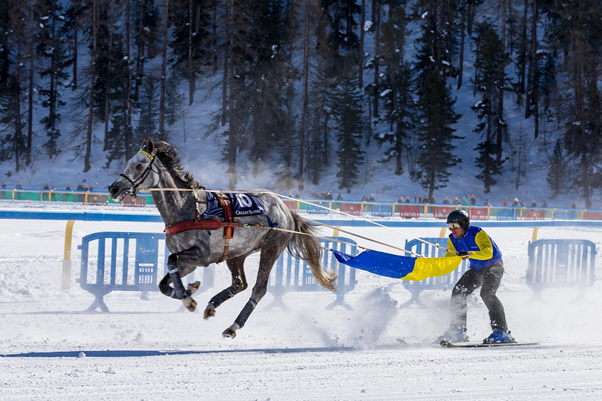
Skijoring sounds like a made-up word until you actually see it happening – someone on cross-country skis being pulled across a frozen field by a horse at serious speed. Then the obsession makes sense.
The sport comes from Scandinavia, which surprises nobody. People who deal with six-month winters tend to invent creative ways to make snow more interesting.
Before You Clip In
The setup looks straightforward: a skier wears a waist harness connected by an elastic line to a horse. The animal runs, the skier gets pulled. But standing there passively guarantees a face full of snow within seconds.
The horse provides power, but the skier handles everything else – balance, steering, constant weight adjustments. Voice commands keep things coordinated: “Whoa” stops movement, directional cues guide turns. Many equestrian skijorers work with a rider on the horse initially, which adds a layer of control while the skier learns fundamentals. The horse needs solid ground training already. Trying to teach an inexperienced animal while also learning to ski behind them creates chaos that benefits nobody.
Experienced skijorers consistently recommend starting with a calm, well-trained horse rather than a young or easily spooked animal. A steady trail horse who’s seen everything and doesn’t react to sudden noises will forgive beginner mistakes and compensate for wobbly technique.
One thing newcomers rarely hear about: horses feel tension through the line and the overall energy of the situation. Gripping the towline with white knuckles and radiating anxiety transfers directly to the animal, making them nervous, which makes the skier more tense. Staying loose sounds like vague advice, but it genuinely matters.
Risk Is Part of It
Every run includes moments where the skier has to decide whether to trust their own instincts or trust the horse, who might sense something they missed. Sometimes the animal notices ice ahead. Sometimes they’re reacting to something irrelevant – no way to know until after committing.
This balance between control and uncertainty is probably why certain people get hooked. Similar dynamics appear in poker, surfing, even online gaming – environments where studying conditions before engaging tends to produce better outcomes. Resources like Freispiele ohne Einzahlung exist because some players prefer understanding the landscape before committing anything real.
Gear That Actually Matters
Showing up underprepared creates problems fast. Cotton clothing, for instance, absorbs moisture and holds it against skin – a recipe for hypothermia. Proper skijoring gear includes a fitted waist harness, quick-release towline for emergencies, helmet, shatterproof goggles, moisture-wicking layers, wider skis for stability, and a first-aid kit covering both human and equine needs.
The quick-release mechanism deserves special attention. Horses are powerful animals – when something goes wrong at speed, that release is the emergency exit. It has to work every time. Good equipment costs money, but so do medical bills. The math favors investing upfront.
Where to Train
First training sessions belong on flat, open terrain with minimal distractions. Ice patches, other animals, uneven ground, loud noises – all of these introduce variables that beginners aren’t ready to handle. The American Kennel Club covers general skijoring principles, and experienced equestrians emphasize building confidence on familiar, predictable ground before adding any complexity.
Dramatic scenery and challenging hills can wait. Early sessions should be boring on purpose, because the skier is already the main variable. Adding more just increases the chances of something going wrong.
Communication Goes Both Ways
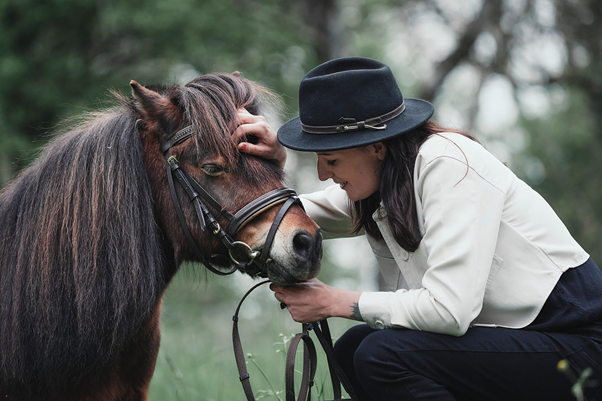
Voice commands and cues flow from skier to horse, but communication works in both directions. A horse pinning ears back, tossing their head, or slowing pace without being asked – these signals mean something. Learning to read equine body language takes time, but matters just as much as any verbal command.
Sessions should stay short initially, especially while both horse and skier are adjusting to the dynamic. Horses remember frustration, and ending day one with exhaustion or confusion creates reluctance on day two. Small victories deserve recognition: a smooth start, a controlled turn, a stop that actually worked.
Mistakes That Keep Happening
Gripping the towline too tightly tops the list. Locked arms can’t adjust to sudden movements. Leaning backward feels instinctive when speed increases, but physics punishes it immediately – weight shifts back, tension hits the line, and the skier falls. Underestimating how much power a horse generates compared to what the skier expects is another common issue.
Weather deserves respect too. The International Federation of Sleddog Sports covers winter sport safety broadly, treating wind chill and visibility as fundamental concerns, not optional considerations. These principles apply equally when working with horses.
Safety Basics
Someone should always know the planned route and expected return time. Falling properly – rolling with momentum rather than bracing against it – reduces injury risk significantly and can be practiced intentionally on soft snow. Horses can’t verbally signal fatigue or discomfort, so watching for changes in gait, heavy breathing, or reluctance matters. And gear inspection before every session catches the frayed towline or loose buckle before it fails at speed.
Getting Started
Nobody looks graceful at the beginning. Falling happens. Getting dragged a few meters happens. Questioning the whole endeavor happens.
But eventually something clicks – commands become automatic, balance adjusts without conscious thought, and reading the horse starts feeling like a second language. One morning everything comes together: gliding across snow, cold air in the lungs, moving faster than solo skiing could ever achieve.